Models for de novo Design
Creating Antibodies in silico
1/14/2025 - January 15, 2025 ALL TIMES PST
Advances in computational methods, including deep learning, transformer, and large language models, are driving a revolution in the de novo design of proteins and peptides. CHI's Models for de novo Design conference brings together experts in computational biology, bioinformatics, and machine learning to discuss the latest developments in this rapidly evolving field. Topics will include advances in single domain antibodies and miniprotein design, applications in cell and gene therapies, automated model generation, binding prediction models, interfaces and design environments, new de novo design models and capabilities, pairing de novo designs with experimental validation, pre-trained models, project updates on de novo designs in the clinic, resolving the limitations of working on full-length antibodies, solving antibody problems with single-chain tools and data, and training and designing de novo algorithms.
Tuesday, January 14
Registration and Morning Coffee
PLENARY KEYNOTE SESSION
Organizer's RemarksÂ
Kent Simmons, Senior Conference Director, Cambridge Healthtech Institute , Sr Conference Producer , Production , Cambridge Healthtech Institute
Plenary Keynote Introduction
Victor Greiff, PhD, Professor, University of Oslo; CTO, IMPRINT , Prof , Immunology & Transfusion Medicine , University of Oslo
The State of the Art for Antibody Structure Prediction

Antibody structure prediction is pivotal for understanding antibody function and for enabling in silico antibody design. This lecture will outline current key advances as well as unresolved challenges in antibody structure prediction.
Design of New Protein Functions Using Deep Learning

Proteins are biology's workhorses. Our goal is to create new proteins that address current-day problems not faced during evolution. Rather than modify naturally occurring proteins, we design new ones from scratch to optimally solve the problem at hand. Increasingly, we develop and use deep learning methods to generate protein sequence, structure, and function. We then characterize these designed molecules experimentally. In this talk, I will describe several recent projects.
Session Block
LATEST TOOLS AND APPROACHES FOR DESIGNING PROTEINS USING MODELS
Chairperson's Opening Remarks

KEYNOTE PRESENTATION:
Accelerating Biologic Drug Discovery with AI: Advancements and Challenges in de novo Antibody Design

The urgent need for novel biologics demands accelerated drug discovery. We leverage AI to expedite therapeutic antibody development, showcasing our progress in de novo design of VHH and mAbs targeting specific epitopes. We'll discuss the strengths and limitations of current AI algorithms, challenges in translating designs into functional molecules, and strategies to refine these algorithms for improved de novo biologic design success.
Developing and Implementing an Effective IP Strategy for an AI/ML-Driven Biologics Therapeutic Program

This talk will focus on understanding IP rights, inventorship, and ownership of AI/ML-based inventions including platform aspects and therapeutic modalities. Deciding between patenting and maintaining trade secret aspects of the platform and modalities will be discussed. It will review life cycle management strategy for a biologics therapeutic program and Freedom to Operate.
Grand Opening Coffee Break in the Exhibit Hall with Poster Viewing
Steering Protein Language Models for Functional Protein Design

Protein language models trained on evolutionarily diverse sequences implicitly model the sequence-function landscape of proteins. These models learn to generate diverse sequences, but must be steered for protein design tasks. We first discuss the generation of diverse CRISPR-Cas effectors for genome editing applications through fine-tuning on curated natural sequences. Next, we present a strategy for steering protein language models through conditioning on structural and functional context.
De novo Designed Proteins Neutralize Lethal Snake Venom Toxins
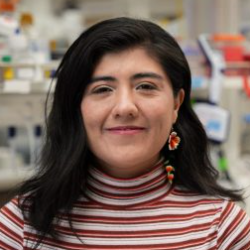
Snakebite envenoming remains a devastating and neglected tropical disease, claiming over 100,000 lives annually and causing severe complications and long-lasting disabilities for many more. Three-finger toxins (3FTx) are highly toxic components of elapid snake venoms that can cause diverse pathologies, including severe tissue damage and inhibition of nicotinic acetylcholine receptors (nAChRs) resulting in life-threatening neurotoxicity. Currently, the only available treatments for snakebite consist of polyclonal antibodies derived from the plasma of immunized animals, which have high cost and limited efficacy against 3FTxs. Here, we use deep learning methods to de novo design proteins to bind short- and long-chain α-neurotoxins and cytotoxins from the 3FTx family. With limited experimental screening, we obtain protein designs with remarkable thermal stability, high binding affinity, and near-atomic level agreement with the computational models. The designed proteins effectively neutralize all three 3FTx sub-families in vitro and protect mice from a lethal neurotoxin challenge. Such potent, stable, and readily manufacturable toxin-neutralizing proteins could provide the basis for safer, cost-effective, and widely accessible next-generation antivenom therapeutics.
Enjoy Lunch on Your Own
Refreshment Break in the Exhibit Hall with Poster Viewing
NEXT STEPS FOR PREDICTING MOLECULAR DYNAMICS AND FUNCTIONAL EFFECTS OF MUTATIONS
Chairperson's Remarks
Deep Learning Guided Design of Dynamic Proteins

Methods from artificial intelligence can now “write†proteins de novo, without starting from proteins found in nature. I will discuss our recent progress with developing deep learning models for de novo protein design, demonstrating that they generalize beyond the training space, and applying them to difficult problems, including atomically accurate design of dynamic proteins. Exciting frontiers lie in constructing synthetic cellular signaling from the ground up using de novo proteins.
Machine Learning Coarse-Grained Potentials of Protein Thermodynamics
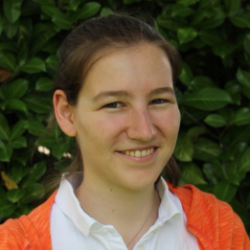
Coarse-grained (CG) models are an alternative to the expensive all-atom models, but reaching high predictive power has been a longstanding challenge. By combining deep learning methods with a diverse training set of protein simulations, we have developed a CG force field which can be used for molecular dynamics on new sequences not used during model parametrization. This showcases the feasibility of a universal and efficient CG model for proteins.
Decoding Molecular Mechanisms for Loss of Function Variants
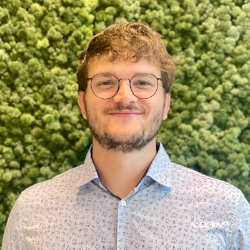
Proteins are essential for cellular function, and missense variants can cause genetic disorders by destabilizing proteins or disrupting key interactions. While prediction of deleterious variants has progressed, understanding of the molecular mechanisms behind these variants remains limited. Thanks to advances in sequence- and structure-based computational predictors, we can now unravel the molecular mechanisms behind loss-of-function and quantify the role of stability in disrupting protein function.
Refreshment Break in the Exhibit Hall with Poster Viewing
Interactive Breakout Discussions
TABLE 2: How Open Competitions Provide Valuable Benchmarking to Novel Technologies


- Why benchmarking is needed
- Designed competitions, and accidental ones
- Lessons from CACHEÂ Â
- The AIntibody competition to assess computational methods in antibody discovery ​
TABLE 3: Designing Functional Proteins Using Generative AI Models
- What types of protein design problems are generative AI models useful for?
- How should we leverage biophysical principles when using generative AI?
- When should we use sequence- vs. structure-based models?
- What types of new data would be most useful for generative AI design platforms?
TABLE 4: AI-Driven Biologics: Accelerating Discovery, Overcoming Challenges
- Motivation:Â The urgent need for novel biologics is driving the exploration of AI in drug discovery
- Focus: AI's potential in accelerating biologic drug discovery, particularly de novo antibody design
- Showcase: Successful AI-driven VHH and mAb designs
- Discussion: AI's strengths in predicting antibody structures, challenges in translating designs into functional molecules, achieving industrial-scale reliability, and closing the gap between computational and experimental results
Panel Moderator:
PANEL DISCUSSION:
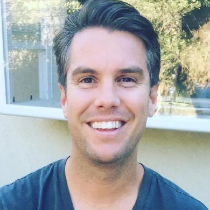
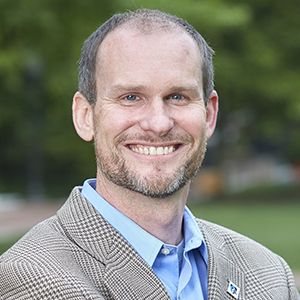
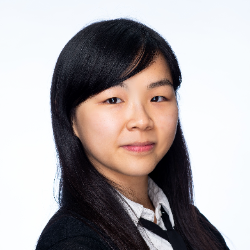
Targeted de novo and in silico Design of Proteins and PeptidesÂ
Panelists:
Networking Reception in the Exhibit Hall with Poster Viewing
Close of Day
Wednesday, January 15
Registration and Morning Coffee
PLENARY KEYNOTE SESSION
Chairperson's Remarks
Rebecca Croasdale-Wood, PhD, Senior Director, Augmented Biologics Discovery & Design, Biologics Engineering, Oncology, AstraZeneca , Senior Director Augmented Biologics Discovery & Design , Augmented Biologics Discovery & Design , AstraZeneca
ML-Powered "Lab-in-the-Loop" Approach for Therapeutic Antibody Discovery and Optimization

In this talk, I will review our latest machine-learning approaches for antibody design and multi-property optimization that we use in our "Lab-in-the-Loop" (LitL) system. I will demonstrate how we use our LitL system to overcome some of the critical antibody design challenges and accelerate drug discovery programs.Â
LATEST TOOLS AND APPROACHES FOR DESIGNING PROTEINS USING MODELS
Session Break
Chairperson's Remarks
KEYNOTE PRESENTATION:
Discovering Safe, Effective Drugs via Learning and Simulation of 3D Structure
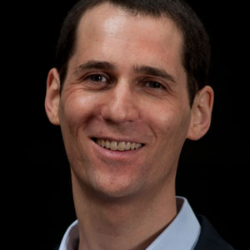
Recent years have seen dramatic advances in both experimental determination and computational prediction of macromolecular structures. These structures hold great promise for the discovery of highly effective drugs with minimal side effects, but structure-based design of such drugs remains challenging. I will describe recent progress toward this goal, using both atomic-level molecular simulations and machine learning on three-dimensional structures.
AI Tools for Antibody Engineering
AI has become increasingly powerful but can be overhyped. Our lab has used AI methods to develop antibody language models, antibody structure prediction models, protein-protein docking models, and antibody design models. I will share recent results, including testing language models’ comprehension of biological antibody maturation processes, benchmarking antibody developability models, and bringing physical energies back into AI predictions. Our results suggest how to use AI tools with appropriate caution.
De novo Design of Epitope-Specific Antibodies Against Soluble and Multipass Membrane Proteins with High Specificity, Developability, and Function

We present JAM, a generative protein design system that enables fully computational design of antibodies with therapeutic-grade properties for the first time. JAM generates antibodies that achieve double-digit nanomolar affinities, strong early-stage developability profiles, and precise targeting of functional epitopes without experimental optimization. We demonstrate JAM's capabilities across multiple therapeutic contexts, including the first fully computationally designed antibodies to multipass membrane proteins - Claudin-4 and CXCR7.
Bagel Booth Crawl with Coffee in the Exhibit Hall with Poster Viewing (Sponsorship Opportunity Available)
PLENARY KEYNOTE SESSION
Chairperson's RemarksÂ
Alissa Hummer, DPhil, Postdoctoral Fellow, Stanford University , Postdoctoral Fellow , Department of Biochemistry , Stanford University
Benchmarking and Integrating ML/AI Advancements in Biologics Discovery and Optimisation for Pharma

Panel Moderator:
FIRESIDE CHAT WITH PLENARY KEYNOTE
Alissa Hummer, DPhil, Postdoctoral Fellow, Stanford University , Postdoctoral Fellow , Department of Biochemistry , Stanford University
Panelists:
Rebecca Croasdale-Wood, PhD, Senior Director, Augmented Biologics Discovery & Design, Biologics Engineering, Oncology, AstraZeneca , Senior Director Augmented Biologics Discovery & Design , Augmented Biologics Discovery & Design , AstraZeneca
Enjoy Lunch on Your Own
Close of Models for de novo Design Conference
For more details on the conference, please contact:
Christina Lingham
Executive Director, Conferences and Fellow
Cambridge Healthtech Institute
Phone: 508-813-7570
Email: clingham@healthtech.com
For sponsorship information, please contact:
Companies A-K
Jason Gerardi
Sr. Manager, Business Development
Cambridge Healthtech Institute
Phone: 781-972-5452
Email: jgerardi@healthtech.com
Companies L-Z
Ashley Parsons
Manager, Business Development
Cambridge Healthtech Institute
Phone: 781-972-1340
Email: ashleyparsons@healthtech.com